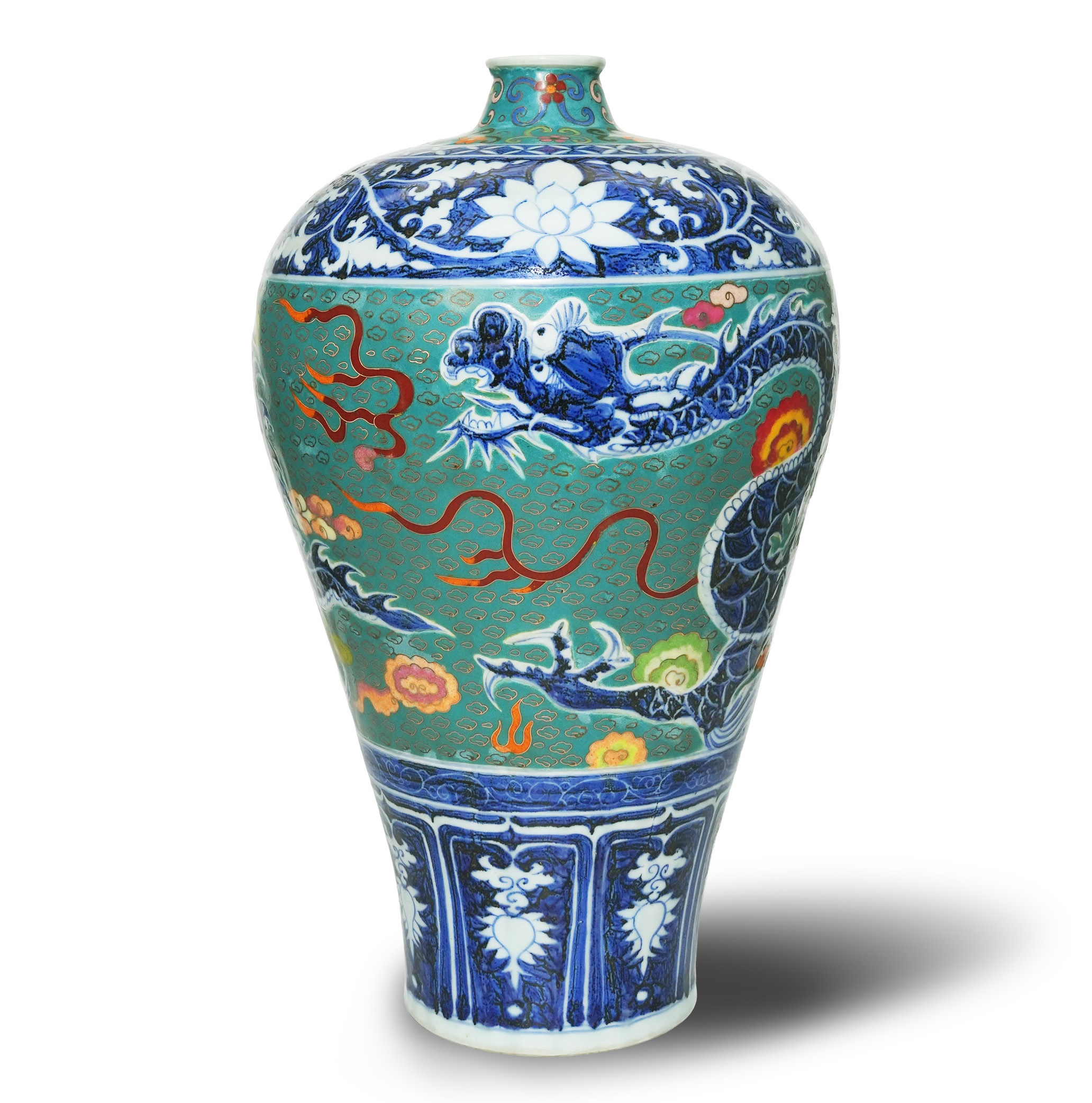
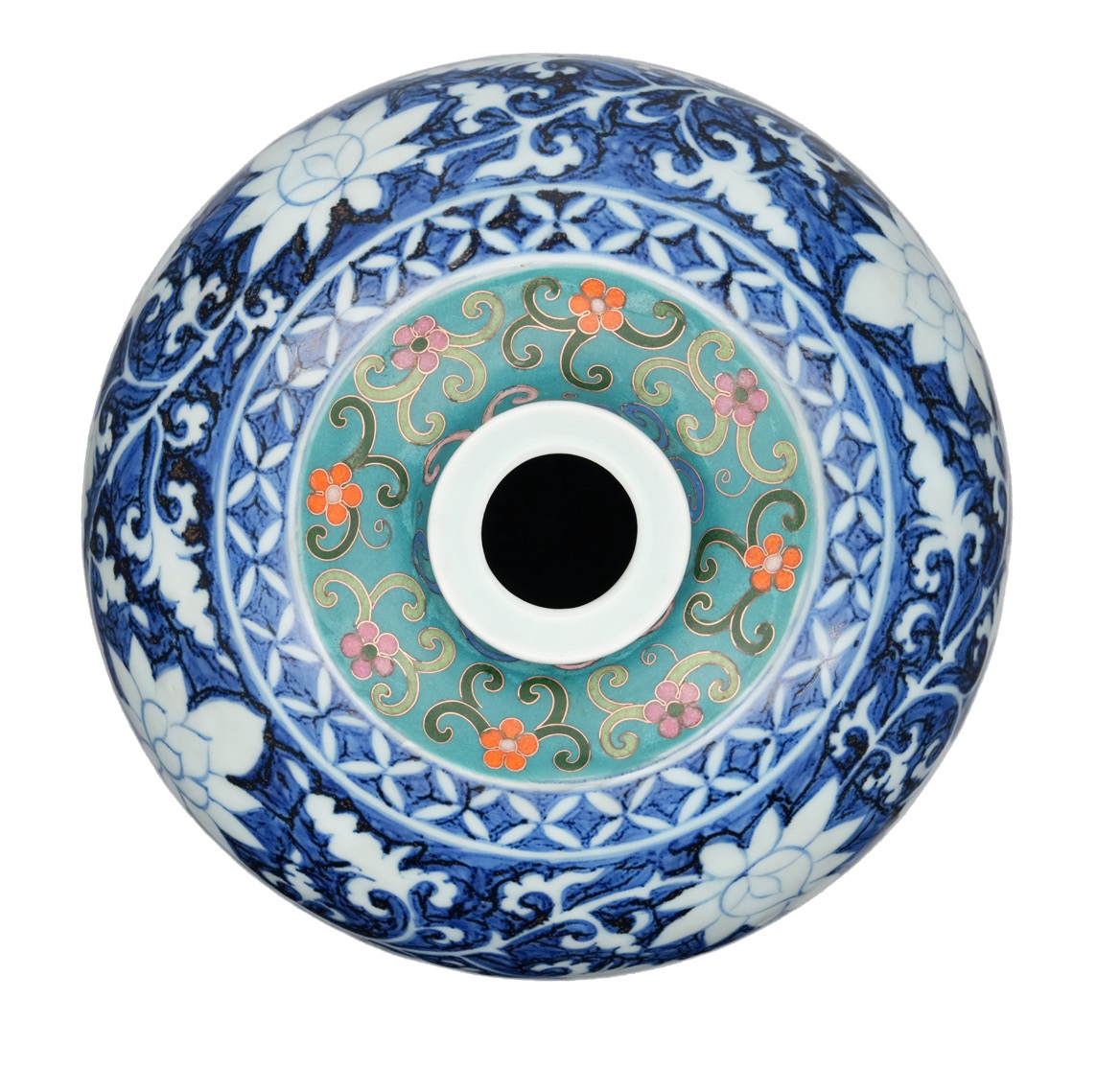
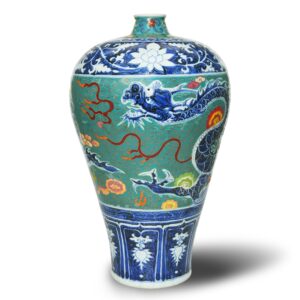
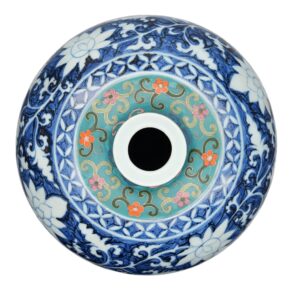
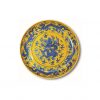
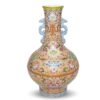
This remarkable meiping is an extraordinary and exceedingly rare work combining cloisonné enamel and underglaze blue painting on a porcelain body—a highly experimental technique unique to the Yuan dynasty. Only a handful of such hybrid works are known in museum collections today, attesting to both their technical audacity and imperial character.
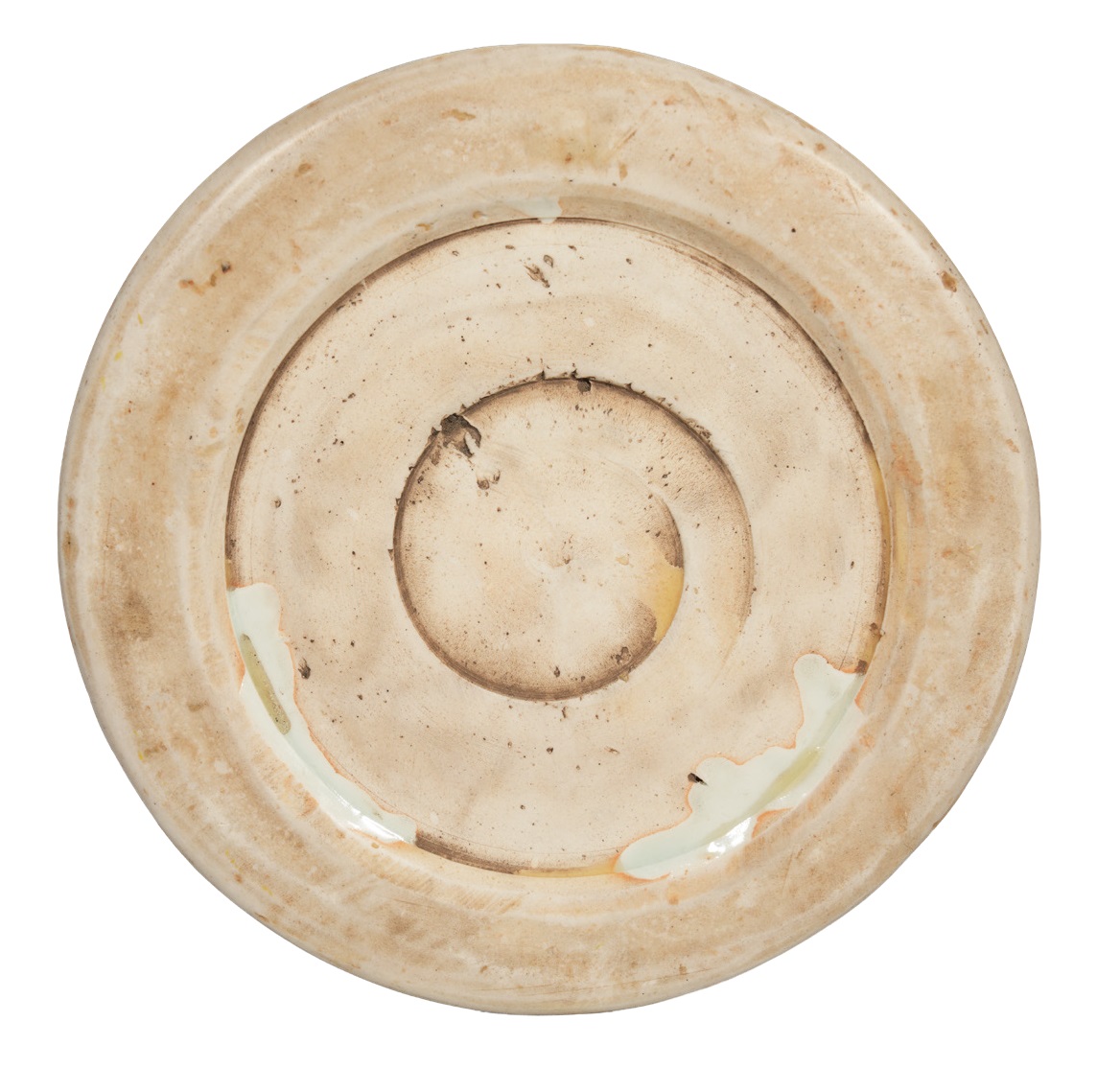
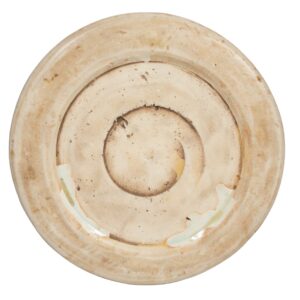
The vase is powerfully potted: small mouth, short neck, broad shoulders tapering to a waisted body and solid circular foot, its form bold and full-bodied. The porcelain body—fired at Jingdezhen—is fine, dense, and lustrous white. Upon this surface, craftsmen meticulously incised shallow grooves to
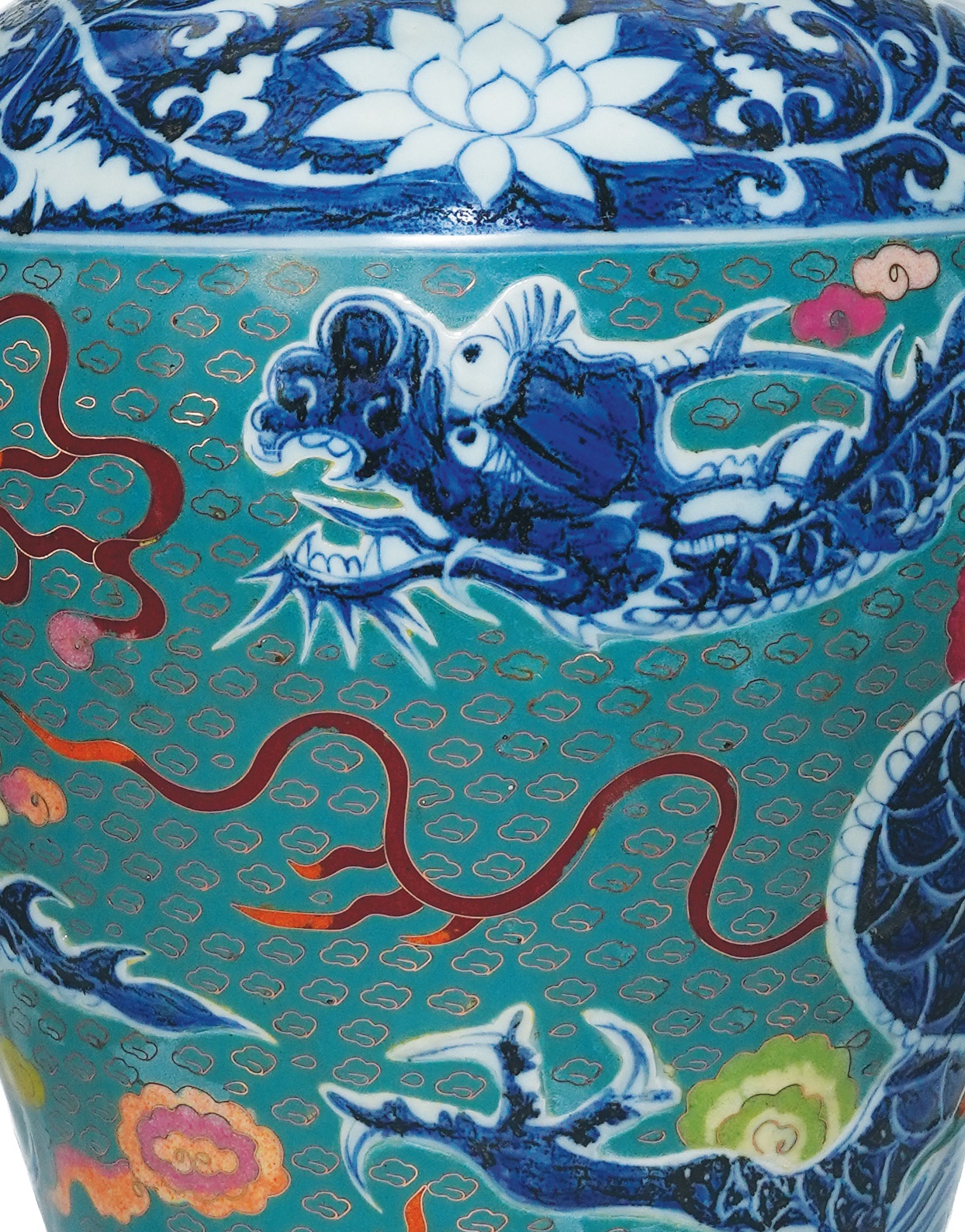
receive thin copper wires (cloisons) bent by hand to form the outlines of dragons, fu characters, scrolls, and lotus petals. These wires were then soldered into place before coloured enamels in yellow, white, red, and blue were carefully filled into the separate compartments. The piece was subsequently fired multiple times at low temperatures (around 800 °C), producing a smooth vitreous surface that was finally polished to a subtle sheen.
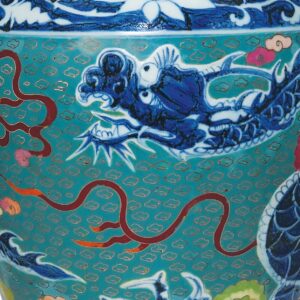
Interwoven with the enamelled motifs are sections of underglaze-blue painting executed in sumaliqing cobalt pigment, remarkable for its deep purplish tone and characteristic “iron specks” and haloing—features distinctive of Yuan blue and white. The dragons, depicted with three claws and lithe, fish-scale bodies, coil energetically amidst cloud and wave patterns, combining the freedom of the brush with the precision of metal inlay. Shoulder bands of scroll tendrils and a lower border of upright lotus petals complete the composition, balancing exuberance and regal formality.
The rich interplay between translucent enamels and cobalt blue underglaze creates an extraordinary textural and chromatic contrast—the warm glow of enamelled colour set against the cool purity of porcelain—a synthesis of metal-craft technique and ceramic tradition seen only in the most innovative workshops of the Yuan imperial era.
Monumental in scale, technically complex, and artistically superb, this Yuan cloisonné-enamel and blue-and-white dragon meiping represents a rare and pioneering achievement in the history of Chinese decorative arts—a masterpiece embodying both the spirit of innovation and the grandeur of imperial craftsmanship.