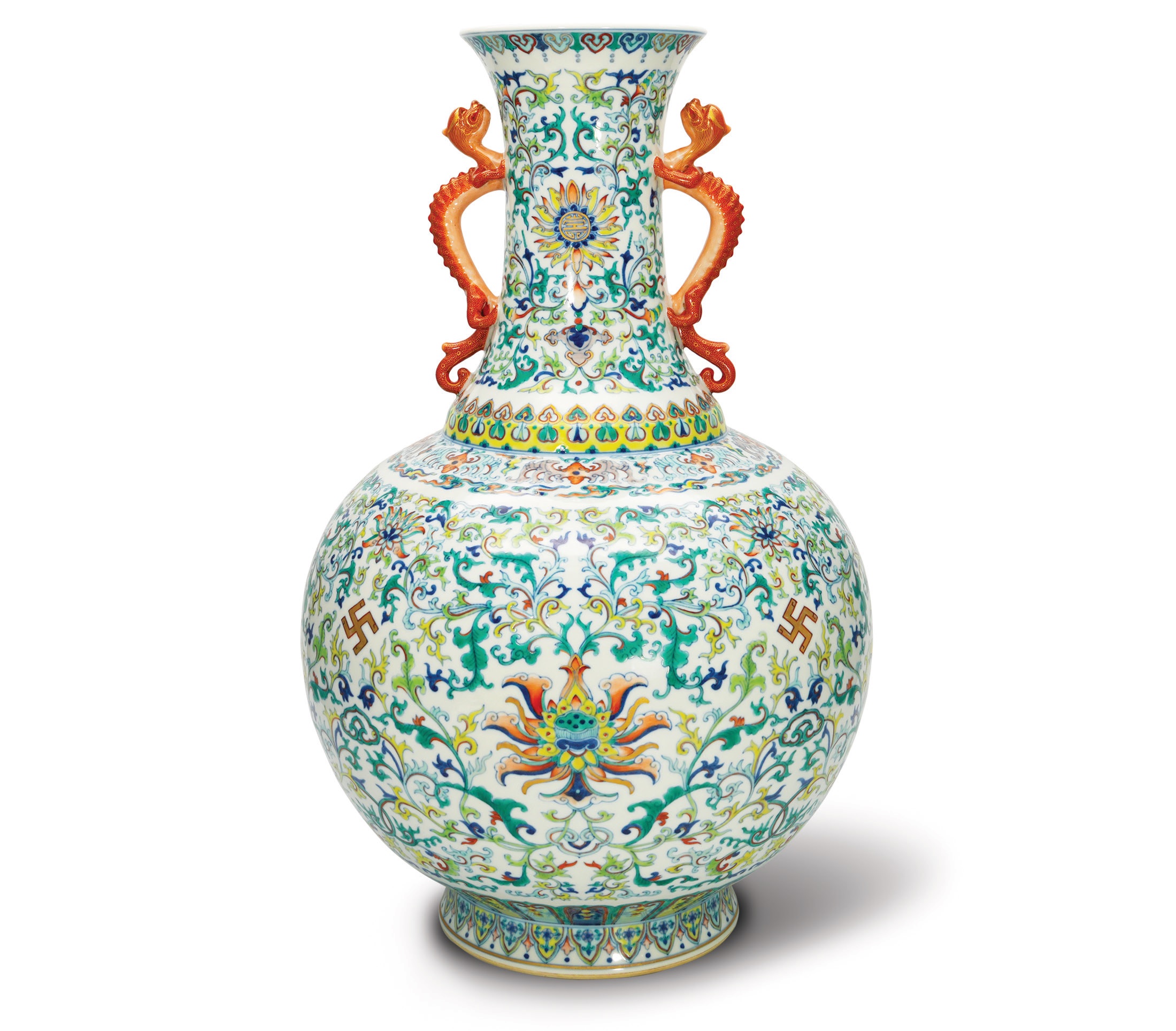
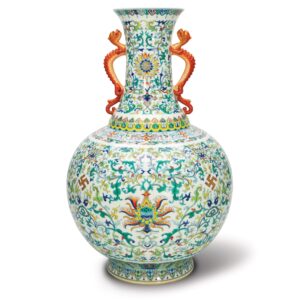
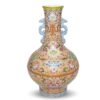
This magnificent doucai and gilt vase, known as the “Ten‑Thousand Blessings and Longevity” vase, represents the height of technical, aesthetic, and symbolic sophistication achieved at the imperial kilns of Jingdezhen during the Qianlong reign. It was produced as an imperial court commission, exemplifying the refined luxury and auspicious motifs favored by the emperor in celebration of longevity and virtue.
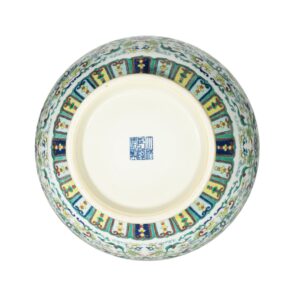
The vessel is of majestic baluster form, with a flared mouth, long cylindrical neck, broad swelling shoulders, full rounded body, and outward‑splayed footring, the structure imposing yet graceful. Flanking the neck are symmetrical chilong (mythical hornless dragon) handles, modelled and enamelled in iron‑red and gilt, serving both decorative and ritual functions.
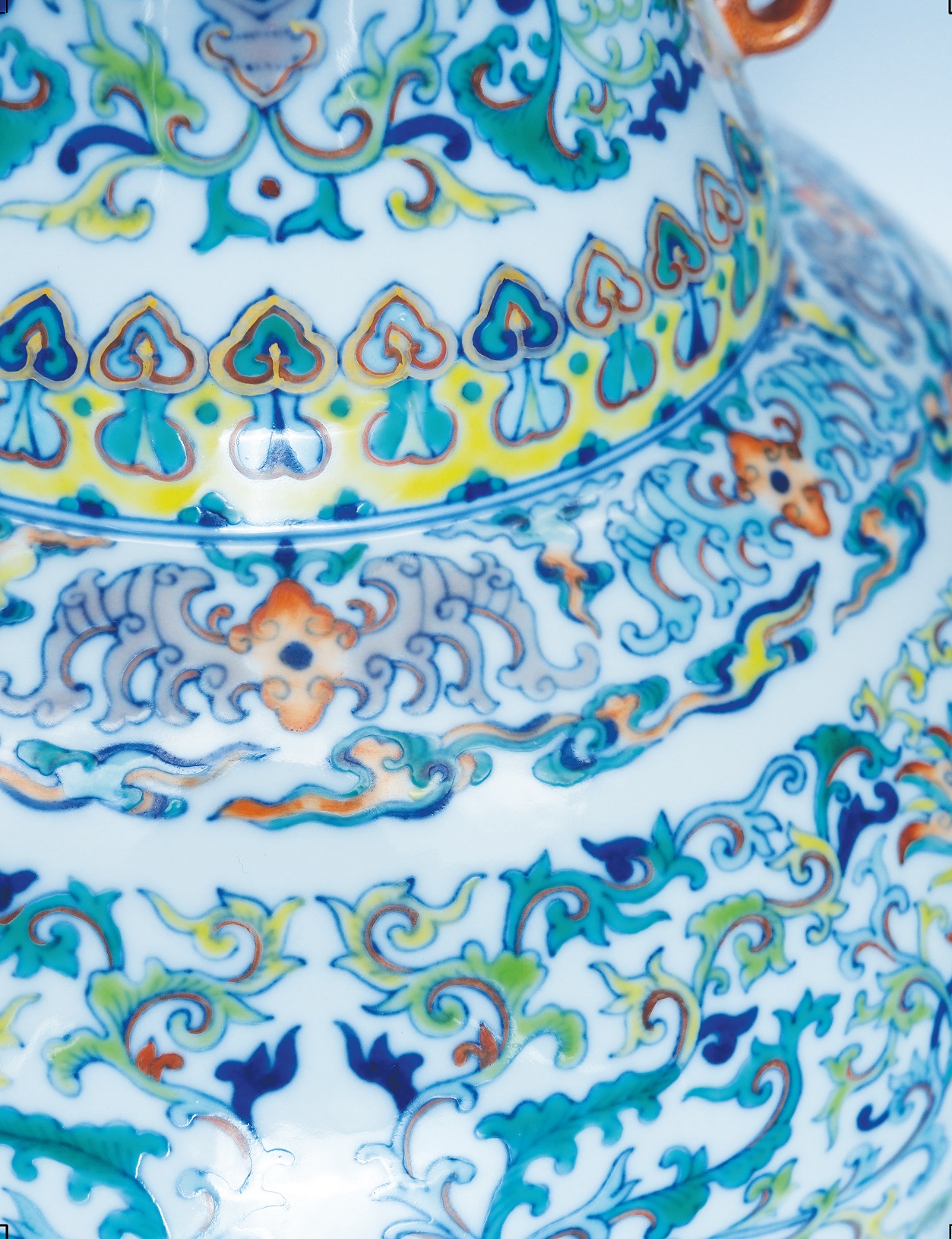
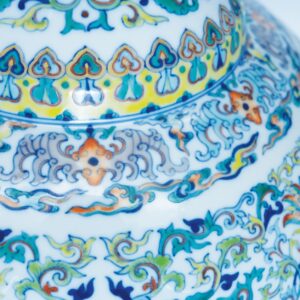
The surface is entirely decorated in the doucai (contrasting colours) technique, combining underglaze blue outlines with richly applied overglaze enamels and gilding. The shoulder and main body are adorned with interlaced lotus scrolls and ruyi cloud patterns, interspersed with gilt swastika (“卍”) emblems, forming the rebus “wan fu lian mian”—“ten‑thousand blessings unending.” The neck bears lush exotic lotus blossoms, each centered with a gilded shou (longevity) character, beneath which hangs lingzhi fungus motifs, symbolising immortality and good fortune.
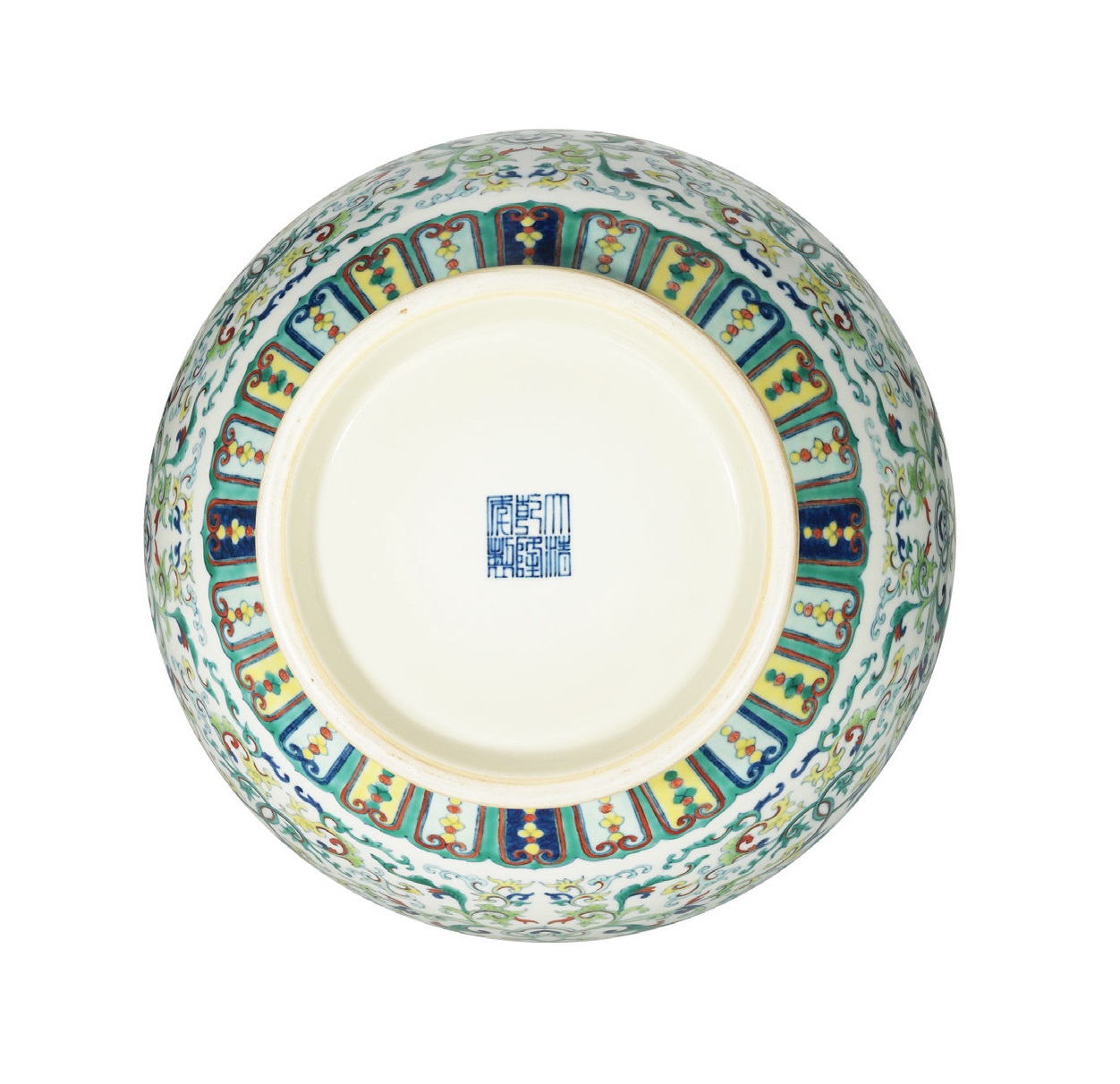
Around the mouth and neck base are borders of ruyi‑head and cloud patterns; below the neck appears a register of bat and cloud designs (yun fu wen)—the bat (fu) a traditional pun for “blessings.” Near the foot runs a band of stylised lotus petals, neatly organised to visually anchor the entire composition. The overall palette displays the hallmark vibrancy of Qianlong‑period enamels: opaque blues, yellows, greens, and rose pinks harmoniously blended, their contours highlighted with delicate gilding.
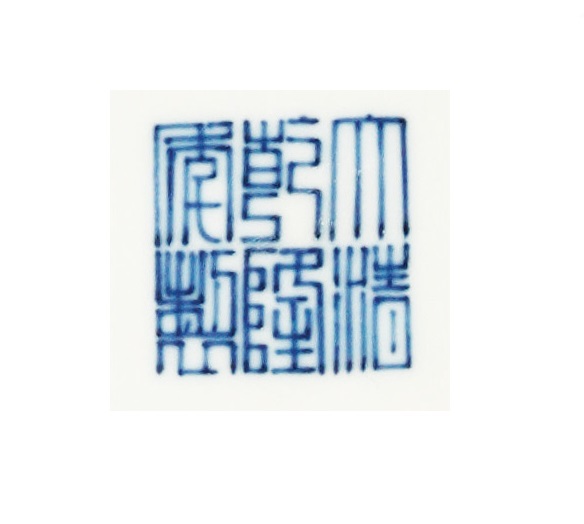
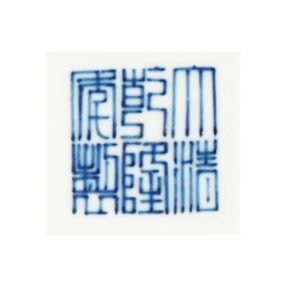
The porcelain body is fine and dense, the glaze pure and lustrous; the composition appears opulent yet balanced, achieving a perfect synthesis of formal symmetry, decorative complexity, and auspicious meaning. On the recessed base is a six‑character seal‑script mark Da Qing Qianlong Nian Zhi (Made in the Qianlong reign of the Great Qing), written in neat cobalt blue typical of imperial ware.
Comparable examples are preserved in major museum collections and have appeared at leading international auctions. A closely related vase sold at Christie’s Hong Kong in 2022 for HKD 34.05 million (including premium), underscoring the exceptional rarity, art‑historical significance, and enduring market value of this iconic design.
Majestic in scale, resplendent in colour, and laden with auspicious symbolism, this Qianlong Doucai and Gilt “Ten‑Thousand Blessings and Longevity” Vase with Chilong Handles stands among the finest achievements of 18th‑century imperial porcelain artistry.