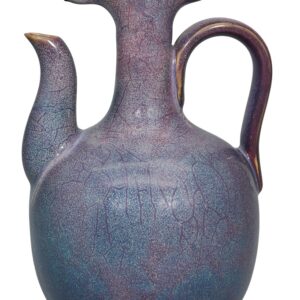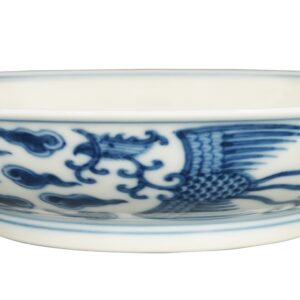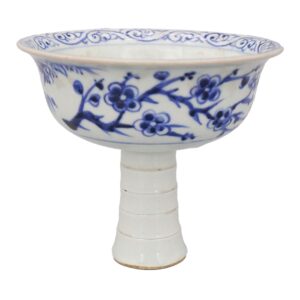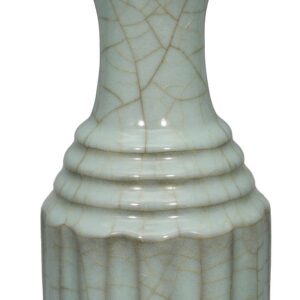
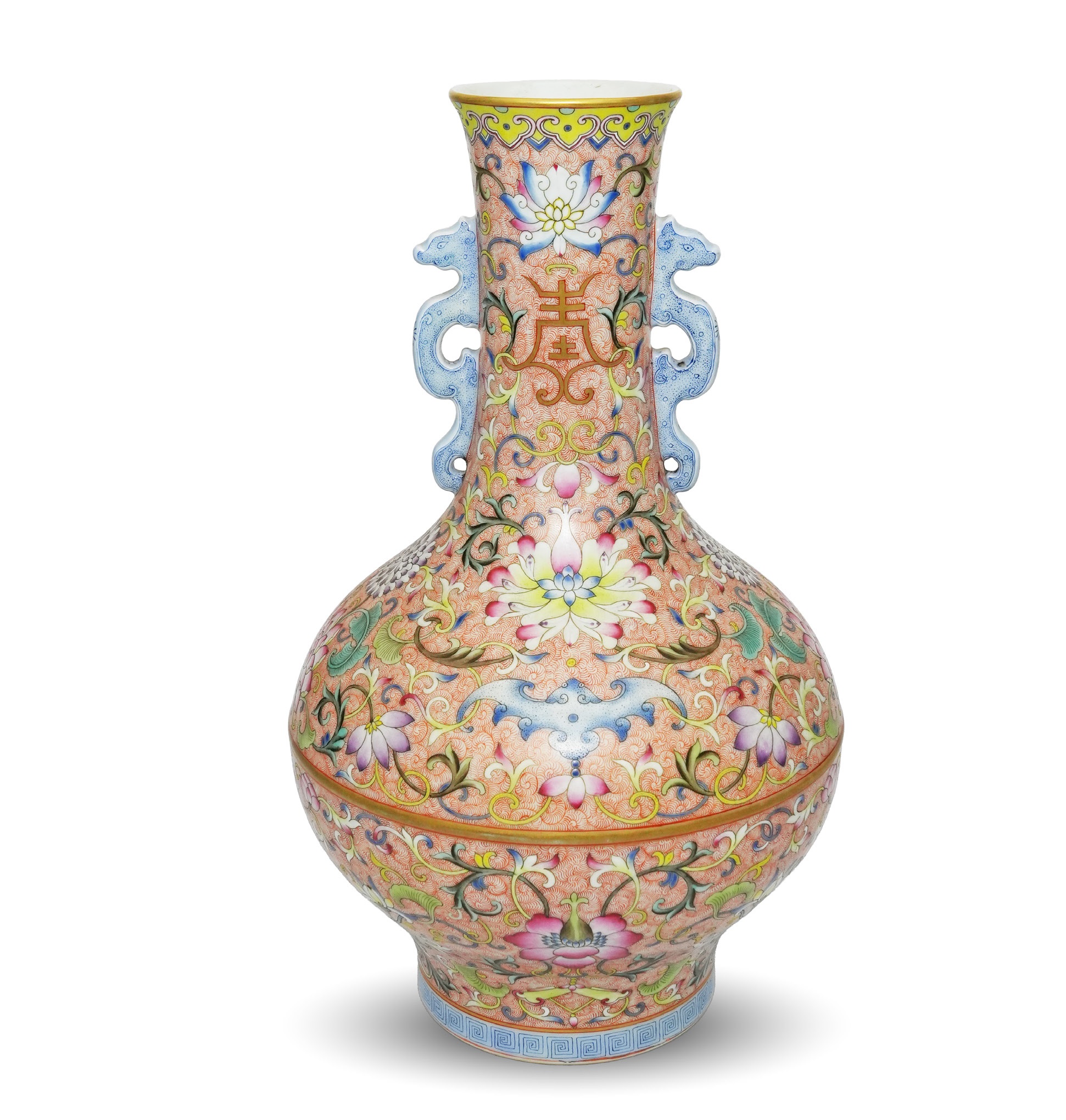
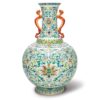
This magnificent guan’erping (vase with loop or tubular handles) exemplifies the technical mastery and imperial grandeur of porcelain production under the Qianlong Emperor. The vessel’s form derives from ancient bronze you and hu ritual vessels, with a tall, upright silhouette, long neck flanked by symmetrical tubular handles, broad rounded body, and slightly tapering foot, imparting a sense of strength and solemn refinement.
Executed in the difficult underglaze copper-red technique, the designs are painted beneath a transparent glaze using iron-based copper pigment and fired at high temperature—a process demanding exceptional control. By the Qianlong period, this technique had reached its zenith, producing a stable, crimson red tone of rich depth and natural shading.
The surface is densely decorated with interlaced lotus scrolls (chanzhi lianwen), signifying continuity and eternal prosperity. Around the rim runs a band of key-fret motifs, below which appear ruyi cloud collars, stylised lotus petals, and rolling sea-water waves, forming a structured and harmonious decorative hierarchy. A band of inverted lotus lappets encircles the base, completing the composition.
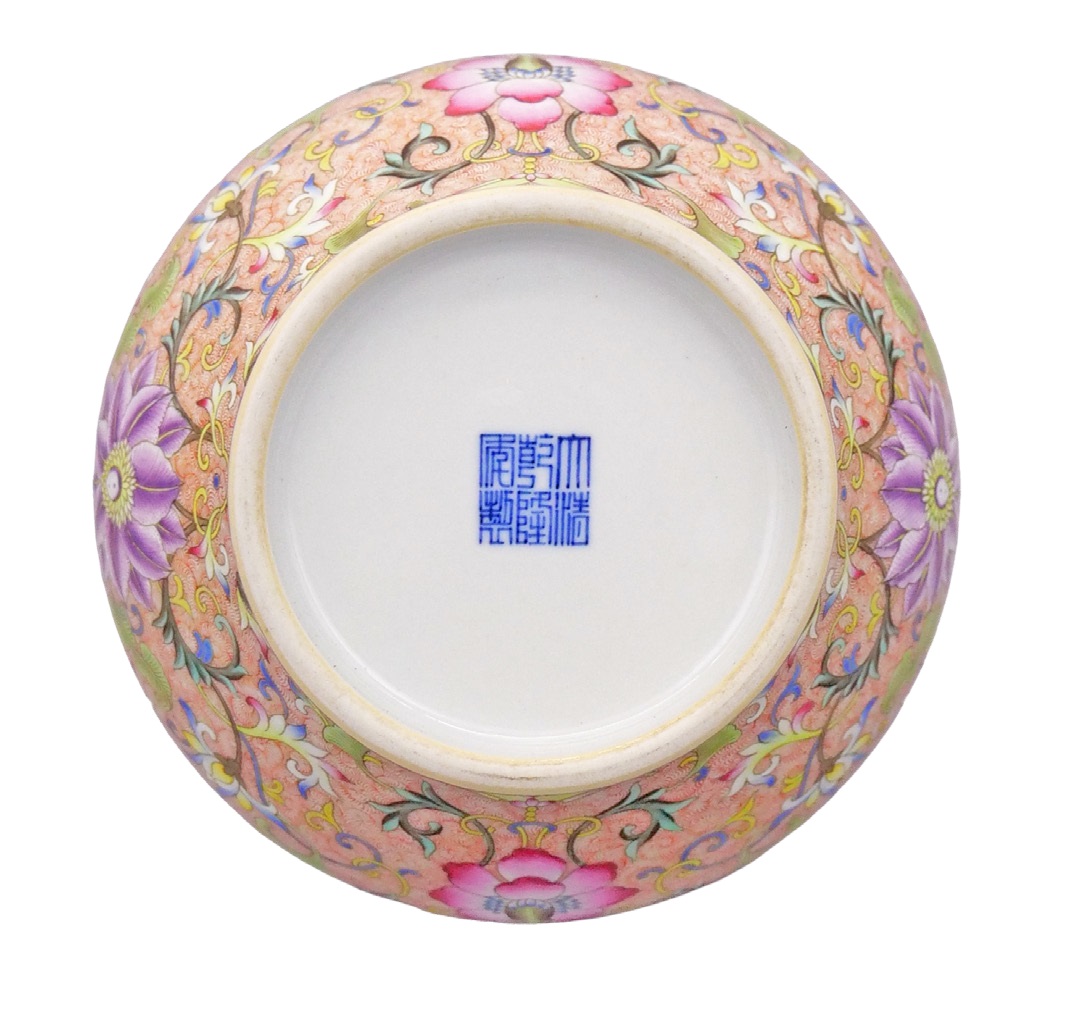
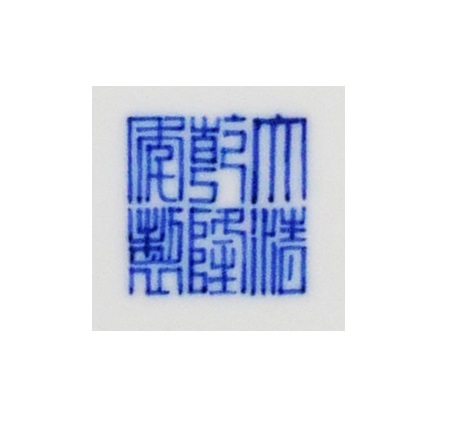
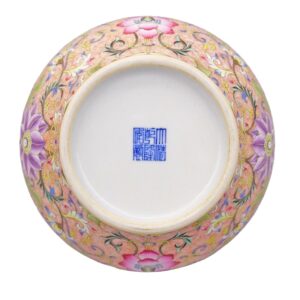
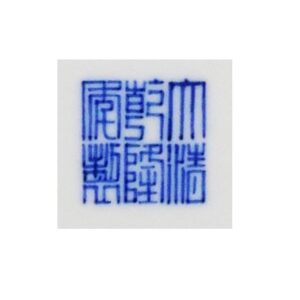
The porcelain body is dense and refined, the glaze clear and glossy, with a faint warm tone that enhances the depth of the copper red. On the recessed base appears a neatly written six-character, three-line seal-script mark Da Qing Qianlong Nian Zhi (Made in the Qianlong reign of the Great Qing) in underglaze blue, the characters round and forceful—typical of imperial wares of the period.
Combining an archaic form with superb underglaze-red decoration, this Qianlong Copper-Red ‘Lotus Scroll’ Vase with Archaistic Handles epitomises the imperial aesthetic of the High Qing—majestic yet meticulously refined, and stands as a masterpiece of eighteenth-century Jingdezhen craftsmanship.